What it is
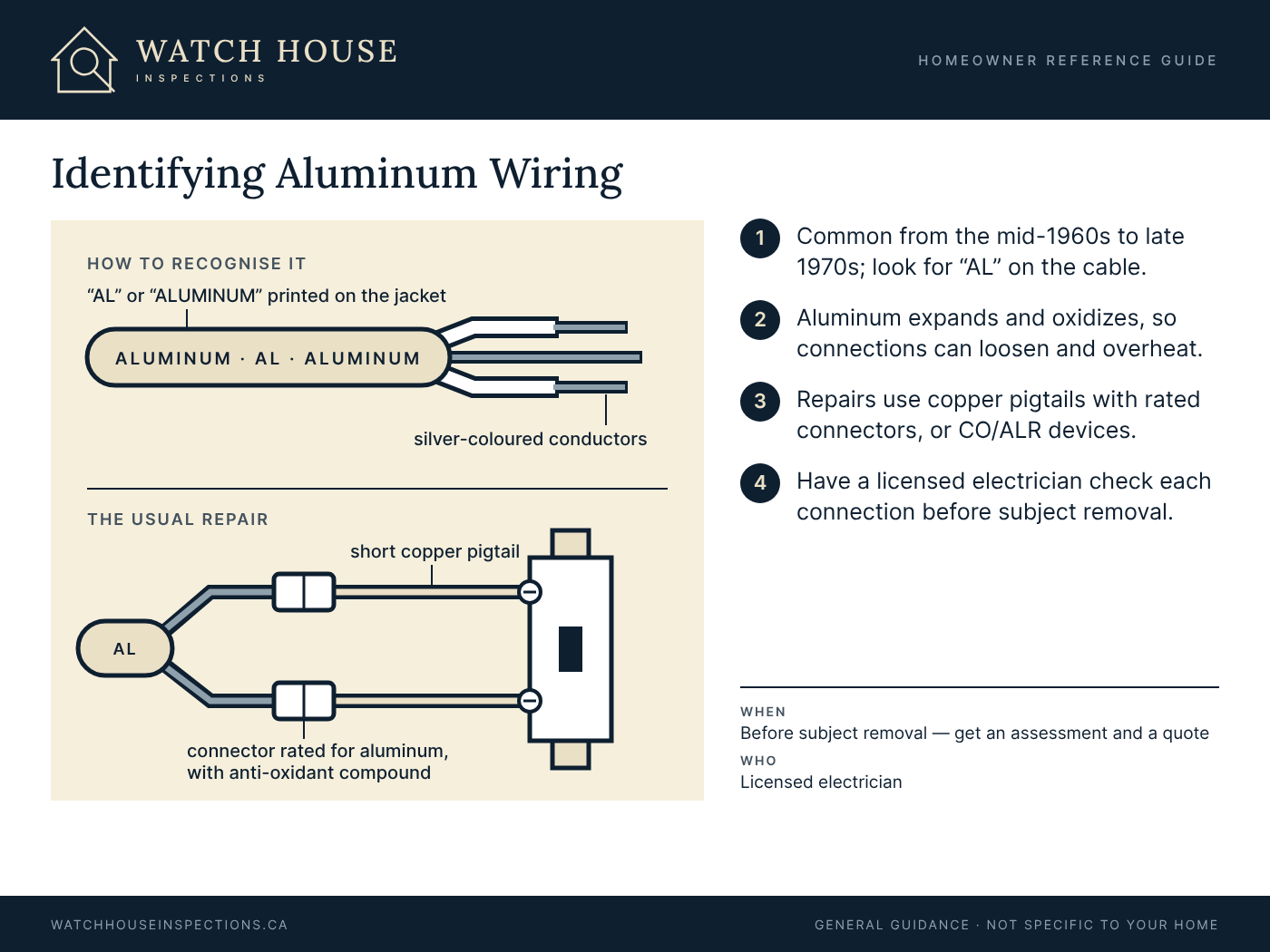
Aluminum branch wiring, the wiring that feeds outlets, switches and lights, was used in some Canadian homes built from the mid-1960s to the late 1970s. It’s considered safe when every connection is made with devices and connectors approved for aluminum and installed correctly. Trouble comes from connections that weren’t: aluminum expands and contracts more than copper and forms an oxide on its surface, so a loose or incompatible connection can develop resistance and heat up over time.
How to recognise it
- “AL” or “ALUMINUM” printed on the cable jacket, visible at the panel, in the attic or in an unfinished basement
- Silver-coloured wire where conductors are exposed
- Outlets and switches marked CO/ALR, which are rated for aluminum and may have been fitted because of it
Heavier aluminum cable feeding the panel or a large appliance is a separate question from the branch wiring that serves outlets and lights.
Why it matters
An overheating connection is a fire risk, and it can sit inside a box with no sign on the outside. Insurers in BC often ask about aluminum wiring, and some want an electrician’s assessment, repairs or replacement before they provide or renew coverage. The usual repair doesn’t mean rewiring the house: an electrician fits devices rated for aluminum, or joins short copper pigtails to the aluminum wire with connectors approved for the purpose.
What to do
- Before subject removal: have a licensed electrician who has worked with aluminum wiring assess the system and quote any repairs.
- Call your insurer with the electrician’s findings, and keep the paperwork.
- After you move in: don’t swap outlets or switches for standard devices; anything new has to be rated for aluminum.
What our inspection covers
We identify the wiring type where it’s visible at the panel and in the attic, basement and crawlspace, and remove the panel cover when it’s safe to do so. We test a representative number of outlets, and thermal imaging can show a connection running warm, but only one that’s carrying load at the time. We don’t open outlet or switch boxes, so we can’t confirm how each connection was made. That takes an electrician.
Buying a home from the 1960s or 1970s? Book an inspection.
Reviewed October 26, 2026 by Nick Hawley, Watch House Inspections. General information, not advice about a particular home.