Why it happens
Warm indoor air carries moisture from showers, cooking, laundry, plants and breathing. When it meets a cold surface such as window glass, an aluminum frame or an outside corner, it condenses. Coastal BC winters are long and damp, so condensation is common in homes with older single-glazed or aluminum-framed windows, little ventilation, or blinds and furniture that keep warm air off the glass. Tighter, newer homes can have the same problem when their ventilation isn’t running; see high-performance homes.
Fogging between the panes of a double-glazed window is a different problem: the seal has failed, and the glass unit needs replacing.
When it becomes a mould problem
Repeated condensation soaks sills, drywall and the corners of rooms, and dark staining or growth that looks like mould can follow. Only sampling and analysis by an accredited lab can identify mould, and that’s outside a home inspection. Health Canada’s advice is that you usually don’t need to know the type: find and fix the moisture source, then clean small and medium areas yourself, and consider professional help when a patch is larger than about 3 m². Have extensive growth assessed before you remove materials, since disturbing it can spread spores.
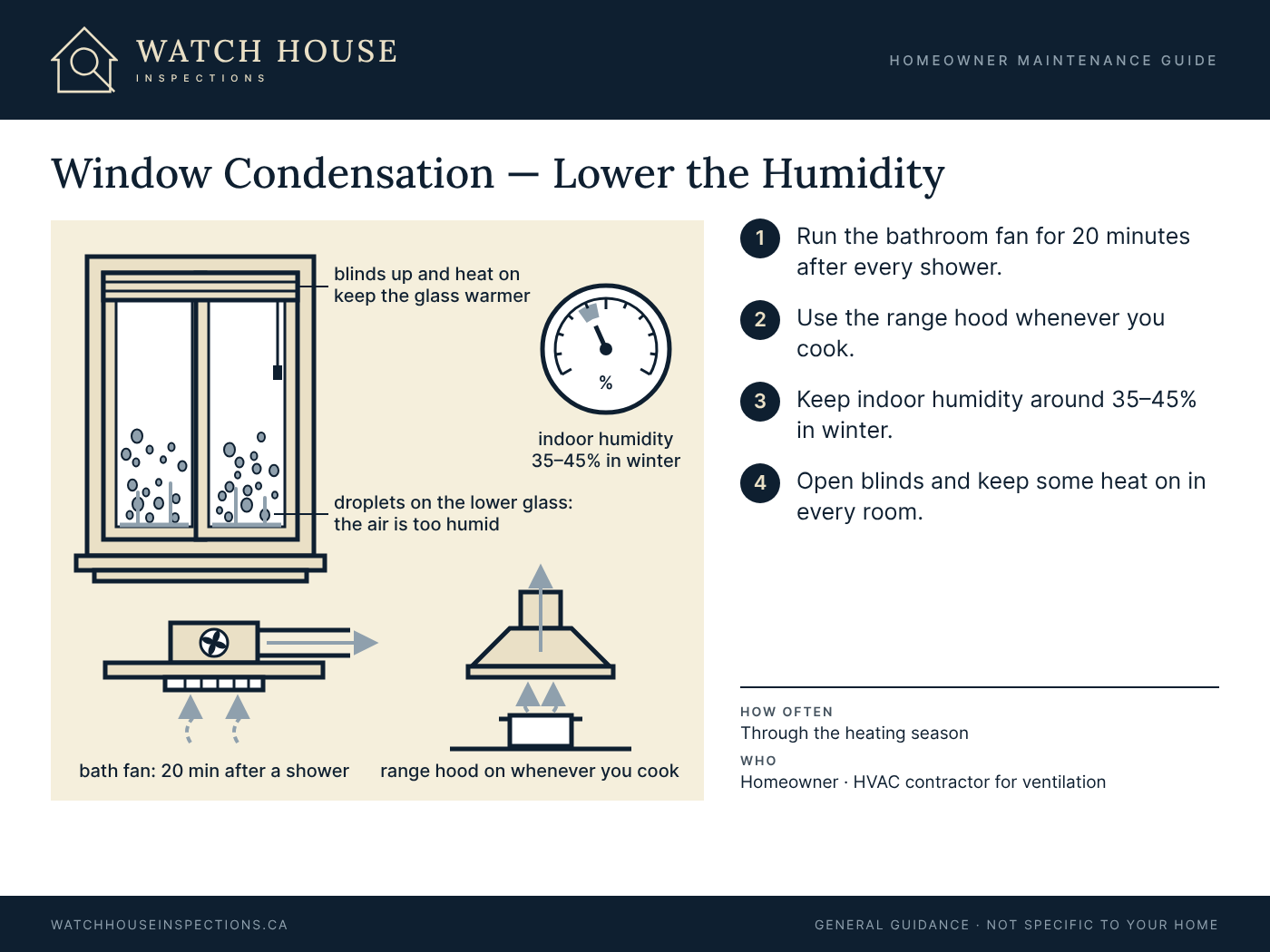
Bringing the humidity down
- Run the bathroom fan during showers and for a while after.
- Use the range hood whenever you cook, and make sure it vents outside.
- Keep winter humidity toward the lower end of Health Canada’s 30 to 50 percent range; a hygrometer shows where you are.
- Keep some heat on in every room, and open blinds during the day.
If the home has an HRV, keep it running and clean the filters as the manufacturer recommends.
What our inspection covers
We check windows, sills and the rooms most prone to moisture, test bathroom fans and the range hood, and look for staining and damp areas with a moisture meter and thermal imaging. We report visible conditions that could indicate mould and say when further evaluation is worth doing. We don’t sample air or surfaces for mould. Condensation is often worst on the coldest mornings, so tell us if you’ve seen it at a viewing.
Seeing condensation in a home you’re buying? Book an inspection and we’ll look at where it’s coming from.
Reviewed October 26, 2026 by Nick Hawley, Watch House Inspections. General information, not advice about a particular home.