What it is
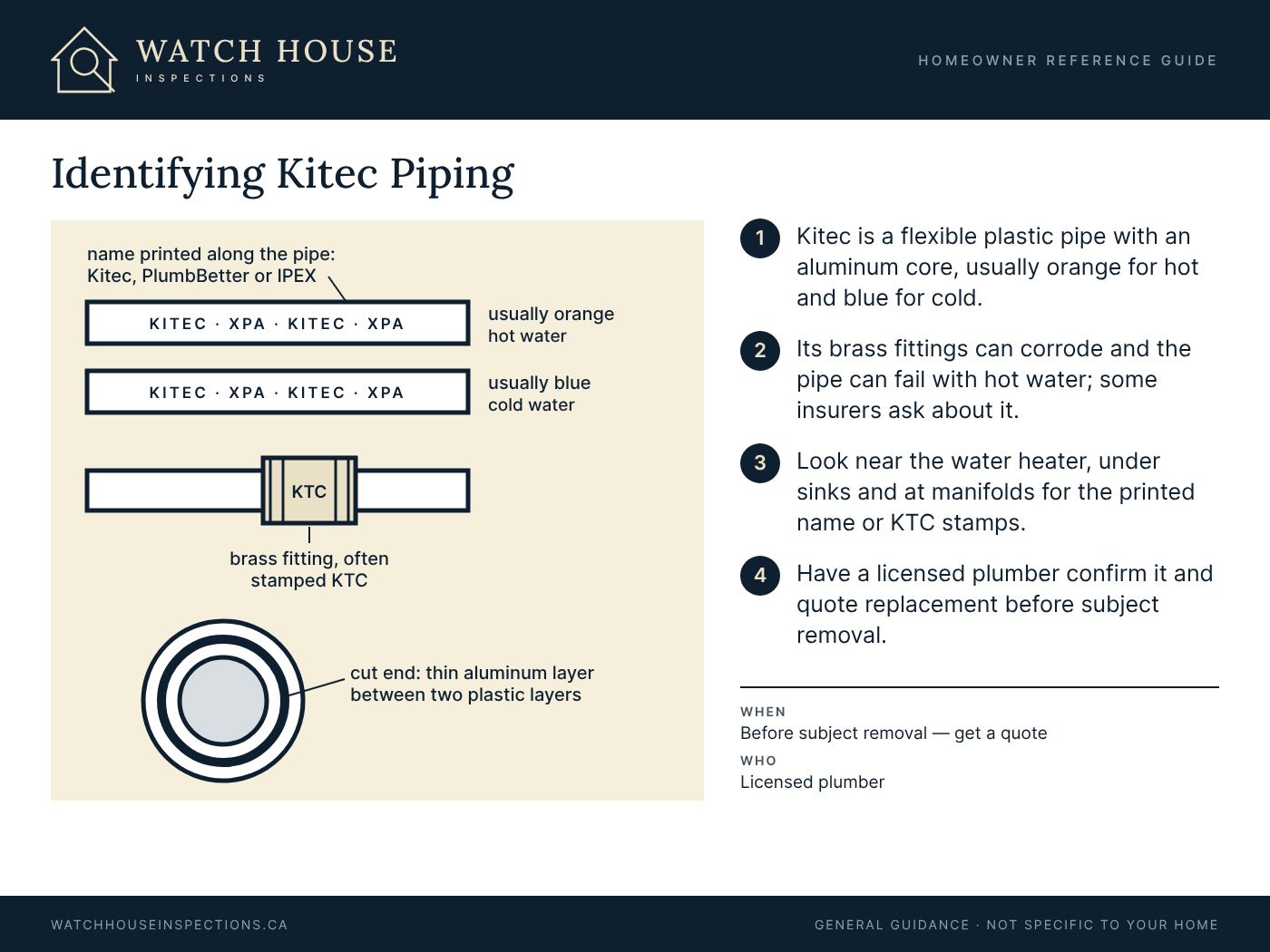
Kitec is a composite pipe: a thin layer of aluminum between two layers of plastic, joined with brass fittings. It was installed in Canadian homes from about 1995 to 2007, for water supply and for in-floor and hot water heating, and it turns up in houses, townhouses and condo buildings from that period. It was sold under several names, including Kitec, PlumbBetter, WarmRite and XPA.
The weak point is the fittings. Their brass has a high zinc content, and the zinc corrodes over time, a process called dezincification. Corrosion builds up inside the fitting, narrowing the waterway and weakening it until it fails, sometimes suddenly. Very hot water and high water pressure can also cause the pipe to fail.
How to recognise it
- Flexible pipe, usually orange for hot water and blue for cold
- A brand name printed along the pipe
- Brass fittings stamped “KTC” or “Kitec”
- Sometimes a yellow sticker in the electrical panel warning of non-metallic water piping
Check at the water heater, under sinks, at the main shut-off and at any heating manifold; in a condo, look in the unit’s mechanical closet. Orange and blue PEX is common too, so the printing and the fittings matter more than the colour.
Why it matters
Insurers in BC often ask about Kitec, and some restrict coverage or require it to be replaced. A failed fitting can release a lot of water quickly, which matters most in a condo, where a leak can reach the homes below. In a strata building, replacing Kitec may be a building-wide project that has already been levied, is being planned, or is still to come.
What to do
- Before subject removal: have a licensed plumber confirm it and quote replacement, and call your insurer.
- In a strata: read the minutes, the depreciation report and the Form B for repiping plans and special levies.
- In the meantime: know where the main shut-off is, and watch the fittings you can see for corrosion or drips.
What our inspection covers
We look at the visible water and heating piping and fittings, read the markings where they’re legible, and report leaks, corrosion at fittings and staining. A moisture meter and thermal imaging help us look for signs of hidden leaks around fixtures and in ceilings. We can’t see inside walls, so we can’t tell you how much Kitec a home has or the condition of concealed fittings. A licensed plumber can.
Looking at a home or condo built between 1995 and 2007? Book an inspection and we’ll look for it.
Reviewed October 26, 2026 by Nick Hawley, Watch House Inspections. General information, not advice about a particular home.