What the sewer line is
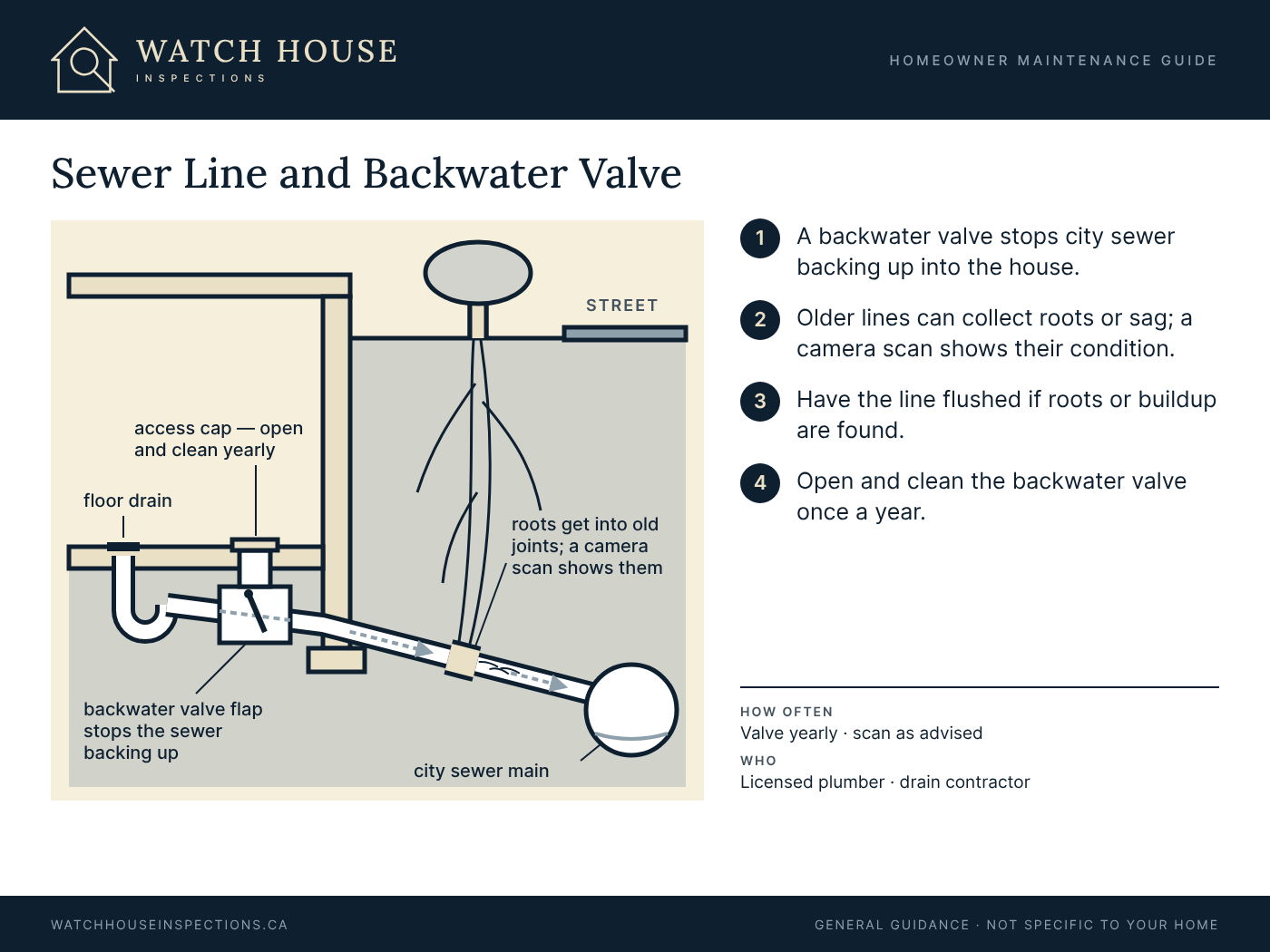
The building sewer, sometimes called the lateral, carries everything from your drains to the municipal sewer main. In the City of Vancouver, owners are responsible for maintaining the sewer line on their property up to the City’s connection, and Surrey makes owners responsible for everything up to the property line. Check your own municipality’s rules.
Older lines have more joints, and roots get into joints and cracks over time. Pipes can also crack, sag or shift as the ground settles, leaving low spots where waste collects.
Signs worth a closer look
- Several fixtures draining slowly, or gurgling drains
- A floor drain that backs up or smells
- Large trees between the house and the street
- An older home with no record of sewer work
Many lines give no sign at all until they block, which is why a camera scan is the usual check for older homes.
Backwater valves
A backwater valve is a flap valve in the building sewer that lets water flow out but closes if the municipal sewer backs up, so sewage can’t come up through a basement floor drain. Older homes may not have one. Where one is installed, it needs an accessible cap, and municipal guidance commonly recommends cleaning the valve once a year through that cap.
What to do
- Before subject removal, for older homes or homes with mature trees nearby: have a plumber or drainage contractor run a camera through the line and give you the video and a written summary.
- If roots or buildup show up: have the line flushed, and get a quote if the pipe is broken or sagging.
- As maintenance: if there’s a backwater valve, open and clean it once a year, or have a plumber do it.
What our inspection covers
We run water through the fixtures and drains, watch for slow drainage and leaks, look for a cleanout and a backwater valve where they’re accessible, and note large trees and signs of past repairs. We don’t run a camera through the sewer line, so a home inspection can’t tell you the condition of the buried pipe. The report says when a scan is worth doing.
Buying an older home? Book an inspection and ask us about fitting a sewer scan into your subject period.
Reviewed October 26, 2026 by Nick Hawley, Watch House Inspections. General information, not advice about a particular home.