What it is
Galvanized pipe is steel coated with zinc to slow rust. It was commonly used for water supply in homes built before about 1950, and in some homes into the 1960s, before copper took over. In Metro Vancouver it turns up in character houses and older bungalows, especially ones that were only partly replumbed: a run near the main shut-off, or a section in a basement ceiling that was never replaced.
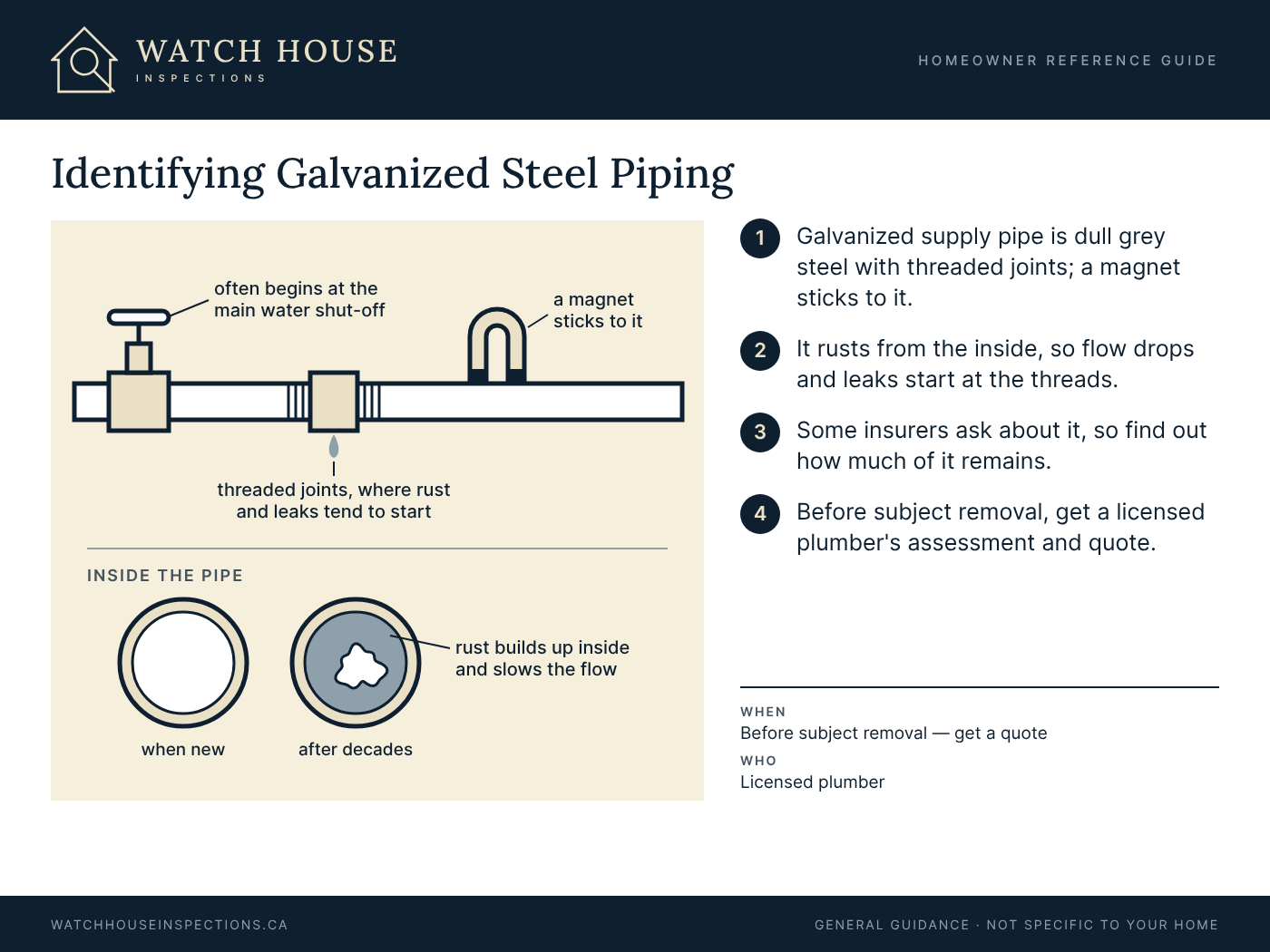
Over the decades the zinc wears away and the steel rusts from the inside. The rust narrows the pipe, which lowers flow and pressure, and leaks usually start at the threaded joints.
How to recognise it
- Dull grey metal pipe with threaded joints and fittings
- A magnet sticks to it; it won’t stick to copper
- Weak flow when two fixtures run at once, or brownish water after the taps have sat unused
Look at the main shut-off, along basement ceilings and under sinks. A home can show copper or plastic in the obvious places and still have galvanized pipe inside a wall or under a floor.
Why it matters
Galvanized pipe has an expected service life of roughly 40 to 50 years, so any that remains in an older house is usually well past it. Insurers in BC often ask about it, and some limit water-damage coverage or require the pipe to be replaced. Replacement means opening some walls and ceilings, which is easier to plan before you move in or renovate than after a leak.
If you’re concerned about the drinking water in an older home, an accredited lab can test a tap sample for lead.
What to do
- Before subject removal: get a licensed plumber’s assessment of how much galvanized pipe remains and a quote to replace it.
- Call your insurer with what the inspection and the plumber found.
- If you’re planning a renovation, replace the pipe while the walls are open.
What our inspection covers
We identify the supply piping where it’s visible, check water flow and drainage at the fixtures, and report leaks, corrosion and staining. The report says where we saw galvanized pipe and where piping was concealed. We don’t open walls or test water quality, and we can’t confirm the material of buried or hidden pipe.
Buying an older home? Book an inspection, and see what we pay attention to in character and heritage homes.
Reviewed October 26, 2026 by Nick Hawley, Watch House Inspections. General information, not advice about a particular home.